.png)
Understand your Nervous System and How To Regulate It
- Alison Steedman

- Aug 25, 2025
- 4 min read
Updated: Sep 12, 2025
Have you ever felt overwhelmed by stress, anxiety, or the daily grind? If so, you are not alone. Understanding how our nervous system works can be a game-changer in managing these feelings. In this post, I will introduce you to the three states of the nervous system and share effective regulation techniques to help you reduce stress and improve your well-being.
The Three States of the Nervous System
Our nervous system is a complex network that influences how we respond to stressors and stimuli. According to polyvagal theory, it can be divided into three primary states: the sympathetic state, the dorsal state, and the ventral vagal state. Let's break these down further.
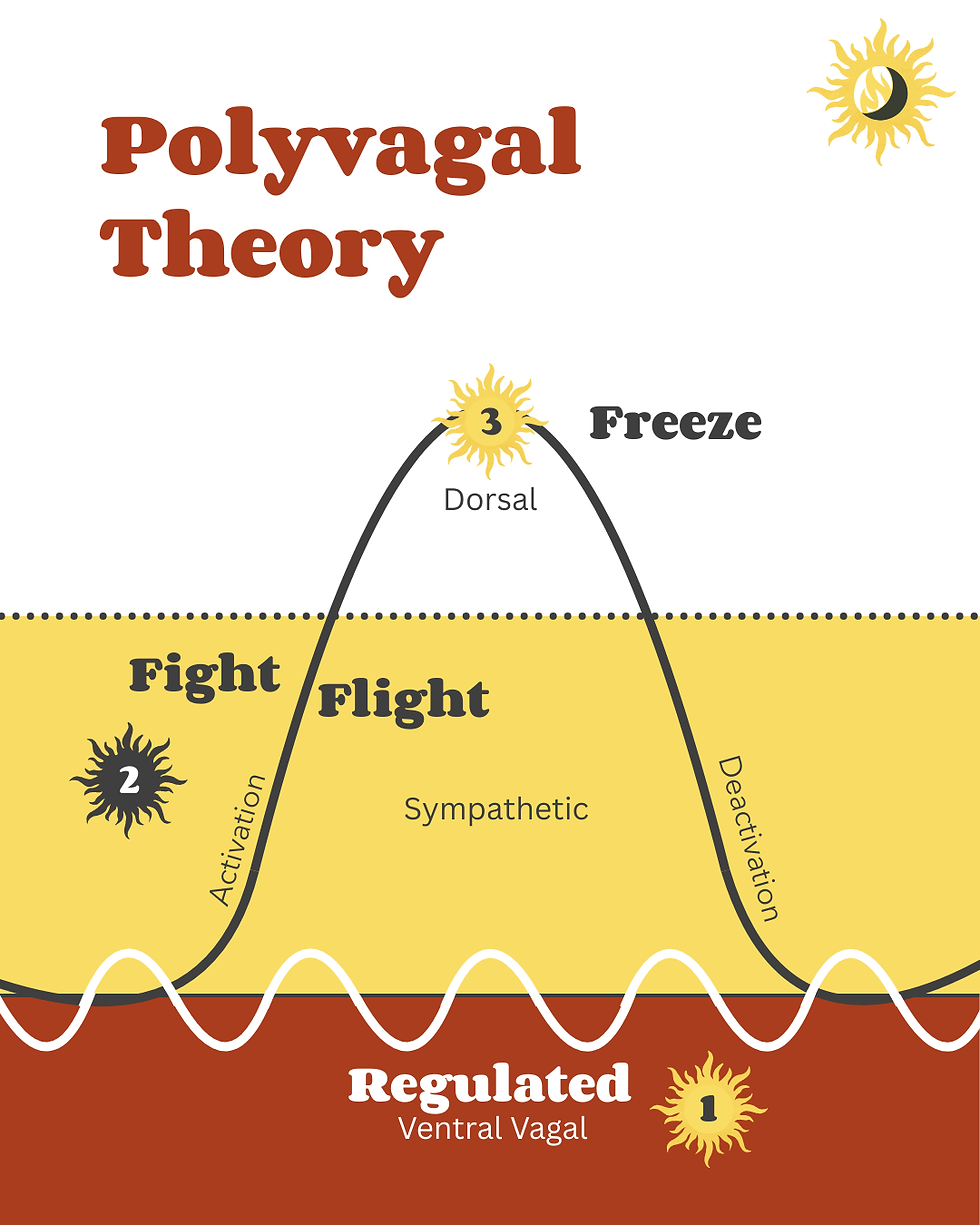
Ventral Vagal State (Regulated)
The ventral vagal state allows for social engagement and connection. This state brings about feelings of safety, calmness, and the ability to connect with others. When we are in the ventral vagal state, we can communicate effectively and empathise with those around us. We can be present, peaceful and joyful here. This is where we want to be most of the time, but sadly most of us identify more with the other two states. Ventral vagal feels like something we can only feel occasionally, but it is possible to maintain it when we are able to regulate ourselves regularly.
Sympathetic State
The sympathetic state is often called the "fight or flight" response. It kicks in when we perceive a threat. During this state, our heart rate can increase by up to 100 beats per minute, muscles tense up, and senses become sharper. While this response is useful in emergencies, chronic activation can lead to health issues like high blood pressure, anxiety, and digestive problems. If you are stuck in this state, you may not be able to sit still or clear your mind. You may feel uncomfortable slowing down and pausing, constantly filling your days with plans, chores and distractions.
Dorsal State
When we feel like we can't escape or tackle the threat our nervous system senses, we freeze up. This is called the dorsal state. In the wild, animals do this by 'playing dead' to avoid predators. In this state, we might feel down, depressed, and unmotivated, almost like we're stuck in place. If you're caught in this state, you might feel disconnected from your life, sleep a lot, and find comfort in withdrawing. You might even feel numb and unable to change, no matter how much you want to.
Nervous System Regulation Techniques
Now that we have explored the three states of the nervous system, let’s dive into practical techniques that can help you manage stress and promote a healthier nervous system.

Deep Abdominal Breathing
One of the simplest and most effective techniques is deep abdominal breathing. When stress creeps in, take a moment to focus on your breath. Inhale deeply through your nose, letting your abdomen expand. Exhale slowly, and allow the exhale to be longer than the inhale. It is important to breathe down into the belly, as this will activate the parasympathetic nervous system and allow us to find the ventral vagal state.
Grounding Exercises
Grounding exercises help you reconnect with the present moment and reduce anxiety. Simply stand or sit comfortably and focus on the sensations in your body. Feel your feet on the ground and the weight of your body. Notice what you can see, hear, smell, and touch. We can use our senses to take our awareness away from the trigger, externalising our mind and allowing us to be in the present moment and environment.
Somatic Therapy
Somatic therapy focuses on the connection between the mind and body. It encourages awareness of the physical sensations and emotions stored in your body, as well as in the mind. Techniques can include movement, breathwork, and mindfulness practices. Engaging in somatic therapy can significantly help release tension, promote safety, and enhance emotional regulation. Work with me if you'd like support in understanding and managing your nervous system.
Nature Walks
Spending time in nature is a powerful way to regulate your nervous system. Nature has a calming effect on our minds and bodies. Spending just 20 minutes in nature can lower our stress hormones. Whether it's a stroll in the park or hiking in the woods, immersing yourself in nature can help you feel more relaxed. This is especially good for when you feel dorsal, as it can bring momentum into the system.
Mindfulness Meditation
Mindfulness meditation is an effective technique for managing stress. By concentrating on the present moment and observing thoughts non-judgmentally, you can create a sense of calm and clarity. Regular practice of mindfulness allows you to understand your thoughts, feelings and sensations in the body. With time, you can become more aware of your nervous system states and learn to shift between them as needed.
Take Charge of Your Well-Being
Understanding your nervous system and its states is a vital step in managing stress, emotions and enhancing your overall well-being. By incorporating techniques like deep breathing, grounding exercises, somatic therapy, nature walks, and mindfulness meditation into your daily routine, you can cultivate a greater sense of calm and resilience.
Remember, it's okay to seek help if you're feeling overwhelmed. Whether through therapy, support groups, or simply talking to a friend, reaching out can greatly improve your mental health. Explore these techniques and find what works best for you. If you feel you need 1-1 support with this, don't hesitate to reach out to me. Your nervous system will thank you!
Subscribe to my email list if you would like regulation tools sent straight to your inbox! I hope to share breathwork, meditation and movement such as yoga. Don't miss out!


Comments